
Machines & Money
NEWS & ANALYSIS · AI, MACHINES & THE ECONOMY
OCTOBER 9, 2026 · FOLLOW THE MONEY · 5 MIN READ
A customer normally pays for computing after someone else builds the data center. Oracle’s filings show the customer increasingly helping fund the construction bill. That changes the question behind the AI boom: who can turn a promise of future demand into cash today—and what must they deliver in return?
IN THIS ISSUE · Oracle’s cash-flow bridge · The customer-supplied GPU · Wisconsin’s electricity bargain
01 / COMPANY ECONOMICS
The customer is also a source of capital
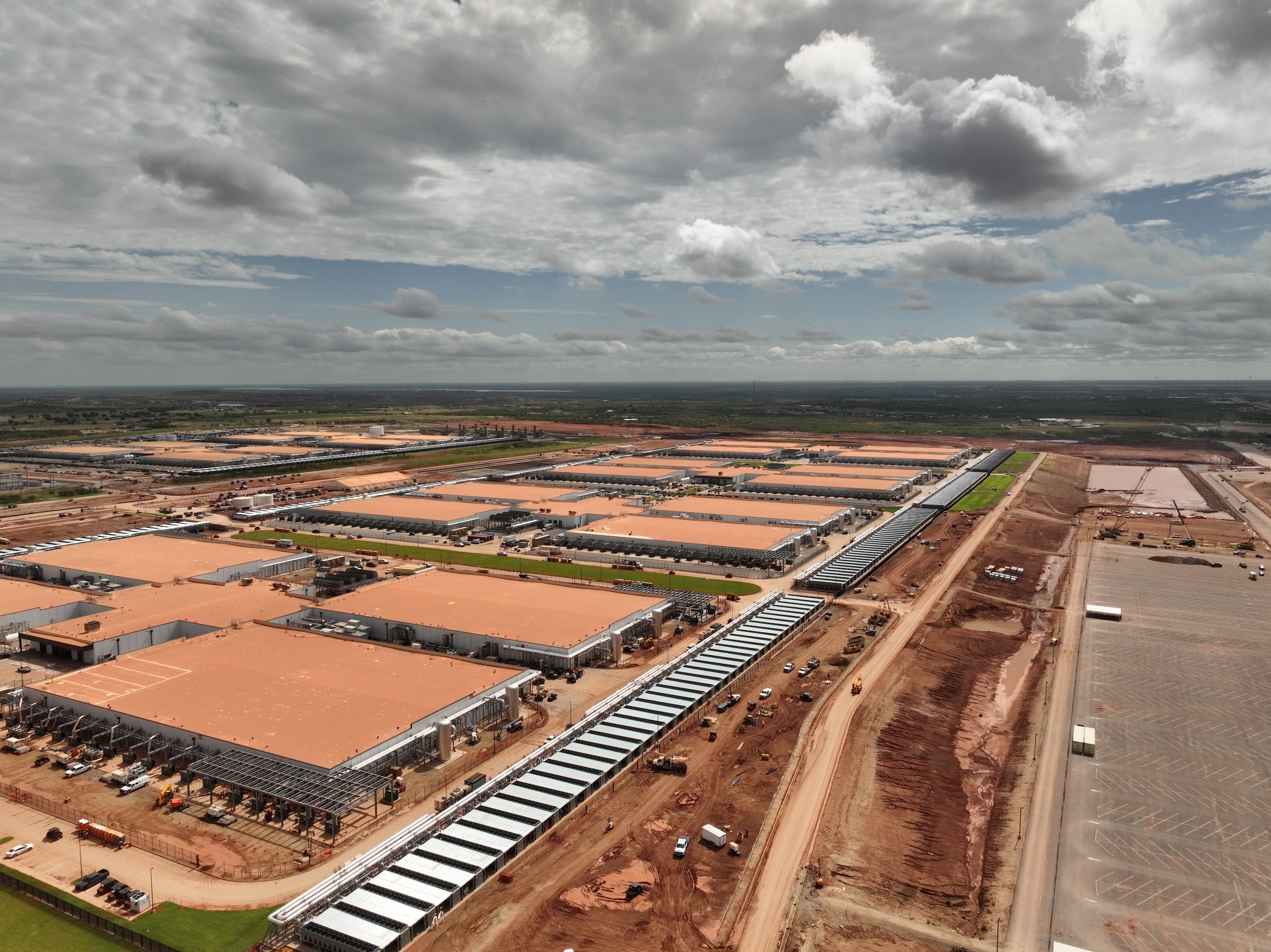
Abilene data halls, July 15, 2026 · Photo: Oracle
Oracle’s September 10 results reported cloud-infrastructure revenue of $7.4 billion, up 121% year over year. The demand is showing up in sales. The more revealing number sits in its cash-flow statement: $11.363 billion of customer prepayments with a significant financing component.
Those payments were included in $23.103 billion of operating cash flow for the quarter ended August 31. They represent roughly 49% of that total, by our calculation. After $28.499 billion of capital expenditure, free cash flow was negative $5.396 billion. These are company-wide figures; the filings do not identify every dollar as AI spending.
FOLLOW THE MONEY · Oracle Q1 FY2027
Deep green: customer prepayments, 11.363²
¹ Calculated remainder, not normalized cash flow.
² Prepayments with a significant financing component.
³ Non-GAAP: operating cash flow less capex.
Source: Oracle Q1 FY2027 results and Form 10-Q.
Original chart: Machines and Money team.
The bridge reconciles in US$ billions: 11.740 + 11.363 = 23.103; less 28.499 = −5.396. “Other operating cash flow” is our arithmetic remainder, not a normalized earnings measure. Free cash flow is the company’s non-GAAP measure: operating cash flow less capital expenditure.
M&M analysis. Prepayment makes a customer part of the financing chain. It can reduce the cash a supplier must find elsewhere before capacity earns revenue. The customer, in turn, commits funds earlier and becomes more exposed to delivery timing. The contract determines how that risk is shared.
The accounting distinction matters. Cash received ahead of service is not the same thing as profit earned by providing it. Equally, negative free cash flow during construction does not prove a project will lose money. A factory can spend heavily before its productive years begin. Neither a large inflow nor a large outflow settles the lifetime return.
The strongest competing interpretation is reassuring: advance payments may demonstrate that customers value scarce capacity enough to help secure it. That can make expansion more financeable. The harder interpretation is that today’s cash strength partly borrows from tomorrow’s collections. Both can be true at once.
The test: track delivered capacity and recognized revenue alongside new prepayments and spending. Look for cash generation that persists as advance-funded services are delivered. A growing backlog alone cannot show whether each new site earns an adequate return.
02 / THE MACHINES
Bring your own GPUs—and your balance sheet

Abilene campus · Photo: Oracle media kit
This structure predates the latest quarter. In its June results, Oracle said much of the preceding two quarters’ backlog growth came from large AI contracts in which customers prepaid for GPUs or supplied the hardware themselves. The prepaid and customer-supplied hardware portions totaled $75 billion. That is a contract-related amount, not $75 billion of cash received in one quarter.
Our interpretation: the commercial advantage may belong to the operator that can coordinate chips, buildings, power and financing on workable terms. Owning every asset is only one route. Customer-supplied equipment changes who funds the machine; it does not remove installation, maintenance, utilization or replacement risk. Watch for disclosure of who carries those costs when hardware ages or a deployment slips.
03 / THE ELECTRICITY BILL
A $300 million commitment still needs approval
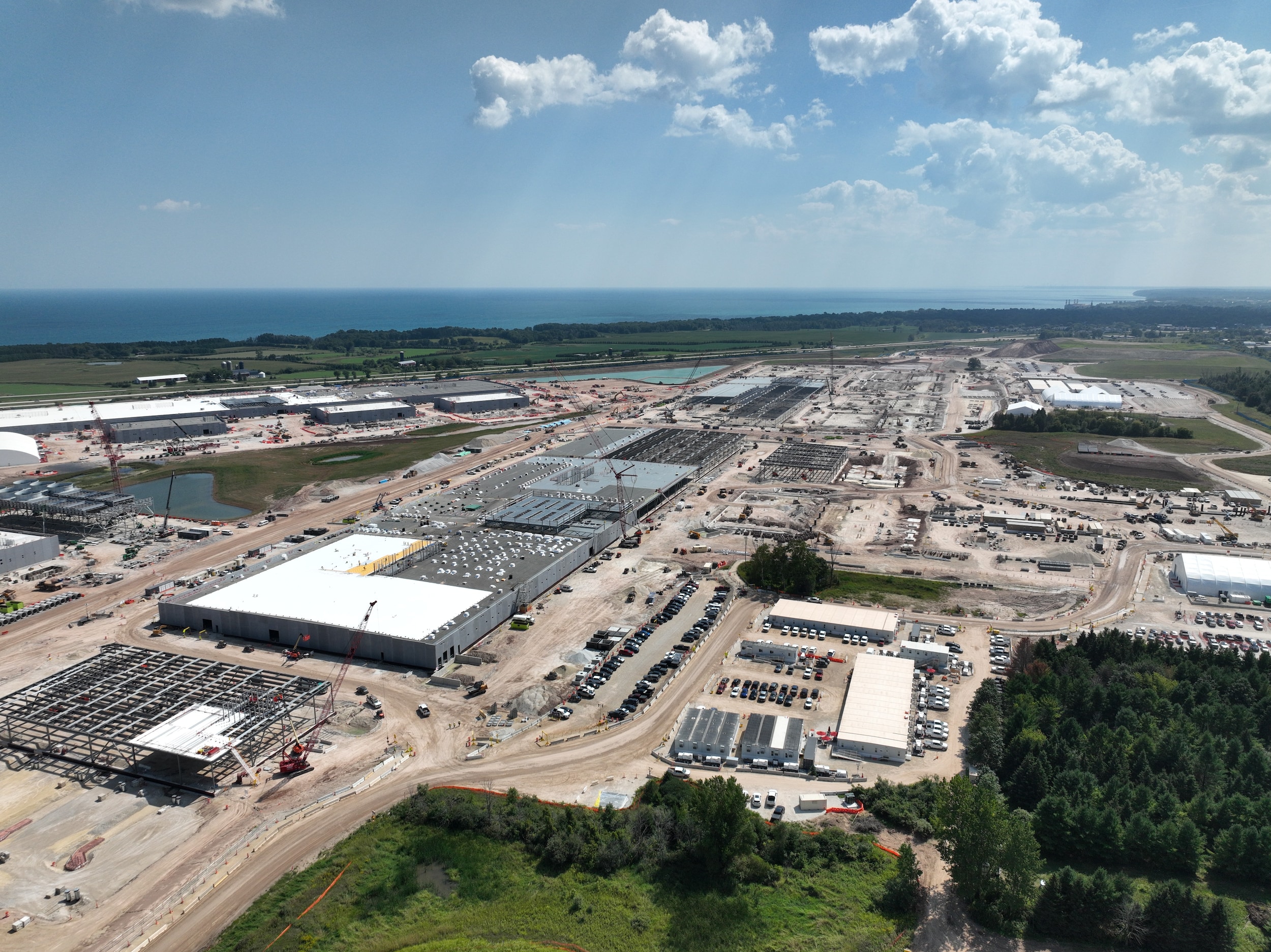
Port Washington construction, August 28, 2026 · Photo: Oracle
On October 2, Oracle announced a planned subscription to part of the Point Beach nuclear plant’s electricity arrangement. It says the commitment would absorb approximately $300 million in rising fuel costs for Wisconsin utility customers. The plan remains subject to the state Public Service Commission’s approval; the savings are projected, not delivered.
This is a useful reminder of what a GPU budget misses. Securing usable capacity also means negotiating who pays for reliable electricity and local infrastructure. Our view: arrangements that address residents’ costs could help projects progress, but the announcement does not establish their effect on Oracle’s margins. Watch the approved terms and the timing of actual power delivery.
THE PRODUCTIVITY RECEIPT
Follow the cash before claiming the return
What changed? Customers are helping fund capacity before receiving the corresponding service.
What is measured? Reported quarterly cash flows and disclosed contract structures. They do not establish project-level returns.
What still costs? Equipment, power, construction, financing and dependable operation across the contract’s life.
Who captures the gain? Customers may secure capacity; Oracle may fund expansion sooner. Durable gains depend on delivery and the full economics of each contract.
OVER TO YOU
If you were buying AI capacity, what would you demand in exchange for paying before delivery? Hit reply with one contract term.
— Machines and Money team
Company disclosures are linked above. Analysis, calculations and chart are ours. This is a financial analysis of reported results, not a claim that all company spending is AI-related.